Can We Approve a Non-QM Loan After a Recent Bankruptcy or Foreclosure?
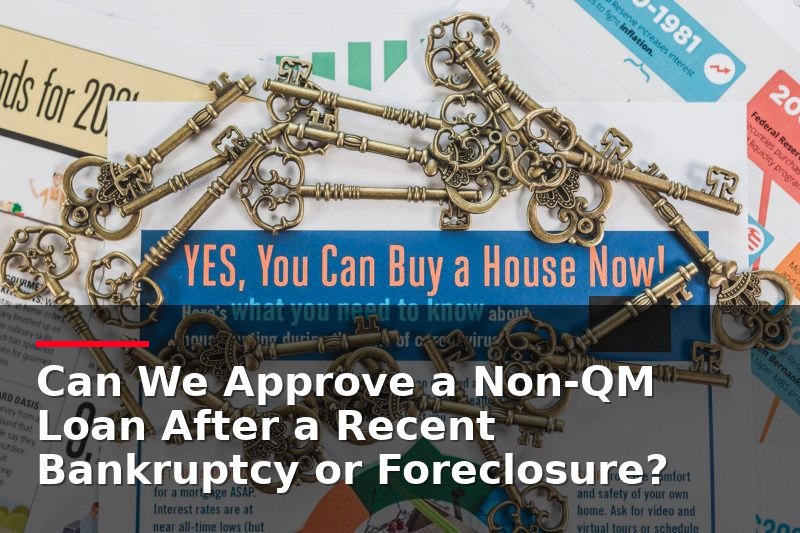
A recent bankruptcy or foreclosure can make it feel like every mortgage door has closed.
Yes, a non-QM loan may be considered after a recent bankruptcy or foreclosure, but approval depends on the event date, rebuilt credit, income, assets, property, and the specific lender’s guidelines.
In this guide, we’ll explain what lenders review, how non-QM financing differs from agency loans, and what you can do before applying.
Key Takeaways
- Eligibility: Some non-QM programs may consider a borrower sooner after bankruptcy or foreclosure than conventional, FHA, or VA financing.
- Requirements: Lenders commonly review housing history, credit recovery, income documentation, reserves, and the reason for the credit event.
- Timing: Waiting periods vary by lender, bankruptcy chapter, foreclosure completion date, occupancy, and loan purpose.
- Tradeoffs: A shorter waiting period may come with a larger down payment, more reserves, or different pricing.
- Best For: These loans can fit borrowers who have recovered financially but don’t yet meet agency seasoning requirements.
At Xie Mortgage Team Powered by NEXA Lending (NMLS# 1660690), we review the complete file instead of stopping at the credit event. Our work in mortgage lending started more than 18 years ago with one goal: give borrowers straightforward answers based on the actual guidelines, not inflated lender overlays.
Quick Answers
- Is a recent bankruptcy an automatic denial? Not under every non-QM program. The discharge or dismissal date, current payment history, and overall financial recovery matter.
- Do non-QM lenders still review credit scores? Yes. Credit score, recent payment patterns, open accounts, and new delinquencies can all affect eligibility and loan terms.
- Can self-employed income be used? Yes. Depending on the program, qualification may use tax returns, profit-and-loss statements, or business and personal bank statements.
- Will the required down payment be larger? It may be. Requirements typically depend on the time since the event, credit profile, occupancy, property type, and requested loan amount.
How a Non-QM Loan Works After a Major Credit Event
A non-QM loan is a mortgage that falls outside Qualified Mortgage standards and uses a lender-specific underwriting framework. It still requires underwriting. Income, assets, credit, property value, and the ability to repay are still reviewed.
The difference is flexibility. Agency guidelines usually apply defined waiting periods after bankruptcy, foreclosure, deed-in-lieu, or short sale. Some exceptions may exist, but they’re narrow and require documentation.
Non-QM programs can use different seasoning rules. A lender may consider the borrower’s full financial picture sooner. Recent event? That doesn’t end the review. It changes the review.
This matters because borrower eligibility and lender appetite aren’t the same thing. One lender may allow a recent event but add an overlay. Another may accept the timing but require stronger reserves or more equity. Same borrower. Different result.
What Lenders Review After Bankruptcy or Foreclosure
1. The Type and Status of the Credit Event
Chapter 7, Chapter 11, and Chapter 13 bankruptcies aren’t reviewed the same way. A discharge is also different from a dismissal. For an active Chapter 13 repayment plan, court or trustee requirements may affect whether financing can move forward.
Foreclosure timing can be equally specific. The lender may use the date the title transferred, the date the foreclosure was completed, or another documented completion date. The credit report alone may not tell the full story.
The supporting legal and property records often determine when the waiting period begins.
2. Payment History Since the Event
What happened after the bankruptcy or foreclosure? That’s one of the first questions an underwriter will ask.
Recent late payments, collections, judgments, or housing delinquencies can show that the financial issue is continuing. Clean payment history can show recovery. A short history may still be considered, but the rest of the file usually needs to support it.
3. The Cause of the Financial Disruption
A written explanation may be required. The goal isn’t to create a dramatic story. It’s to connect the documents.
Job interruption, business loss, major uninsured expenses, or a property-specific problem may help explain what occurred. The lender will usually want to see that the issue has ended or is being managed. Direct, transparent, no jargon.
4. Current Income and Employment
Non-QM doesn’t mean income is ignored. It means income may be documented differently.
A salaried borrower may qualify using standard employment documentation. A self-employed borrower may use tax returns or a bank statement mortgage program, depending on the file. The lender may analyze deposits, business expenses, ownership percentage, and the stability of the business.
For rental property financing, a DSCR loan program may focus primarily on the property’s rental income compared with its proposed housing expense. Personal credit events still matter, but personal debt-to-income calculations may not drive qualification in the same way.
5. Down Payment, Equity, and Reserves
More borrower equity can reduce lender risk. So can verified funds remaining after closing.
Depending on the program, a recent credit event may lead to a higher down payment or reserve requirement. Gift funds, business funds, retirement accounts, and proceeds from another transaction may be treated differently. Documentation matters.
6. Property and Loan Purpose
A primary residence, second home, and investment property can have different requirements. Purchase, rate-and-term refinance, and cash-out refinance files may also be treated differently.
Property eligibility matters too. Condominiums, rural properties, mixed-use buildings, short-term rentals, and properties needing repairs may require a separate review. A borrower can meet the credit standards while the property does not.
Agency Loans vs. Non-QM Loans After Bankruptcy or Foreclosure
| Review Area | Agency Financing | Non-QM Financing |
|---|---|---|
| Waiting period | Defined by the applicable conventional, FHA, or VA program, with limited exceptions. | Varies by lender and may allow earlier consideration. |
| Income review | Usually follows standardized agency documentation and calculation rules. | May allow bank statements, asset-based methods, or property cash flow, depending on the program. |
| Credit event review | Primarily based on program rules, event dates, and any permitted exception. | Often considers timing together with credit recovery, equity, reserves, and property risk. |
| Loan terms | Generally standardized within the program. | Pricing and requirements can vary significantly among lenders. |
An agency loan may still be the right long-term target if the required waiting period is nearly complete. A non-QM loan may make sense when waiting would interfere with a purchase, refinance, or investment plan. We compare both paths. Not just the first available path.
How We Evaluate a Recent Bankruptcy or Foreclosure
A useful review starts before a full application. Here’s the process:
- Confirm the event. We identify the bankruptcy chapter, discharge or dismissal status, foreclosure completion date, and any related property disposition.
- Review the credit report. We check scores, housing history, new accounts, unresolved balances, and reporting errors.
- Document current income. We determine whether standard documentation, bank statements, or rental-property cash flow fits the scenario.
- Verify available funds. We review down payment, closing funds, reserves, and the source of large deposits.
- Match the property and purpose. We consider occupancy, property type, purchase or refinance purpose, and requested cash back.
- Compare lender matrices. We separate actual program requirements from individual lender overlays.
That last step matters. A decline from one lender doesn’t establish a universal rule. But an available program also doesn’t mean every file meets its standards. The documents decide.
Documents to Gather Before Applying
A complete package helps us identify problems early. Depending on the scenario, we may request:
- Bankruptcy petition, schedules, discharge, or dismissal documents
- Chapter 13 payment history and any required court or trustee authorization
- Foreclosure deed, trustee’s deed, settlement statement, or title records
- A written explanation of the circumstances and financial recovery
- Recent mortgage or rental payment history
- Income documents appropriate to the loan program
- Bank, investment, or retirement statements showing funds and reserves
- Purchase contract, mortgage statement, insurance information, or lease documents
Don’t assume the credit report has the right date. Bankruptcy accounts and foreclosed mortgages can be reported inconsistently. Legal records may provide the date the underwriter must use.
Tradeoffs to Consider Before Choosing Non-QM
Earlier eligibility can solve a timing problem. But flexibility has a cost.
Non-QM rates, fees, down payment requirements, and reserve standards may differ from agency financing. Some loans include prepayment penalties where permitted, particularly for investment properties. Others may have restrictions on cash-out, property type, or recent mortgage delinquencies.
The right comparison is total structure, not rate alone. Review the cash needed at closing, monthly payment, loan term, prepayment provisions, and possible future refinance strategy.
As of 2026, program matrices continue to vary. Rates, fees, and underwriting requirements can change. Current information should always be verified for the specific borrower, property, and lender.
Local Review for Virginia and Other Markets
We help borrowers throughout Hampton Roads, including Virginia Beach, Chesapeake, Norfolk, Hampton, Newport News, Williamsburg, and Yorktown. We also serve borrowers across Northern Virginia, Richmond, Charlottesville, Roanoke, and other Virginia markets, along with Birmingham, Indianapolis, and Cleveland.
Local property conditions can affect the file. Condo eligibility, insurance costs, flood zones, rental income, and appraisal support can all influence the final loan structure. Credit is only one part of the decision.
Let’s Review the Actual Timeline
Bankruptcy or foreclosure on your record? Start with the dates. Then the documents. Then the loan options.
We invite you to call, text, or email us to review your scenario, compare available programs, and understand the next steps. If you’re planning a purchase, we can also map out pre-approval timing before you write an offer.
Frequently Asked Questions
Can I get a non-QM loan while I am still in a Chapter 13 repayment plan?
Some programs may consider an active Chapter 13, but the lender will review payment history, plan status, and any required court or trustee authorization. Program rules vary, so the legal documents should be reviewed before a property offer or refinance application.
Which date starts the waiting period after a foreclosure?
The controlling date may be the completed foreclosure sale, title transfer, or another documented disposition date. Because credit reports can show incomplete information, lenders commonly request recorded title or foreclosure documents.
Can I complete a cash-out refinance after bankruptcy or foreclosure?
It may be possible, but cash-out transactions often have additional seasoning, equity, credit, and reserve requirements. The lender will also review how the property was acquired and whether any recent mortgage payments were late.
What if I have more than one major credit event?
Multiple events may narrow the available programs and lead to stricter equity or reserve requirements. An underwriter will review the timing, causes, and payment history after each event rather than treating every event the same way.
Should I request a pre-approval before choosing a property?
Yes, an early review can identify the usable event date, documentation gaps, and property restrictions before you make an offer. A pre-approval remains conditional on updated documents, the selected property, appraisal, title, and final underwriting.
This is educational and not financial advice. Loan programs and guidelines can change. Talk with a licensed mortgage professional about your specific scenario.

David W. Xie
David Xie is a mortgage broker with 20+ years of experience helping real estate investors and self-employed professionals access DSCR and bank statement loans when traditional lenders say no. NMLS #262139
Related Posts